First, there was a feather pen and an inkwell. Then came the typewriter. Now wordsmiths use a keyboard and mouse. But where did the mouse come from, and what will it look like in the future? Join us as we scroll through the history of the humble computer mouse.
1952 — First Trackball

The Royal Canadian Navy invented the first device that relied upon hand motions to move a cursor in 1952. Its main part was a five-pin bowling ball mounted in some hardware. It tracked which way the ball turned and then translated that information into on-screen motions. Because the project was a military secret (shhh!), the design was never patented.
1963 — First Mouse

The device that we consider the ancestor of the modern mouse was developed in 1963 by Douglas Engelbart. It used two wheels to deliver movement data in two axes and just like a modern mouse, it was handheld.
1968 — First Trackball Mouse

In 1968, the company Telefunken released the Rollkugel (German for “rolling ball”). It had a trackball underneath, along with a single button, and it was used for drawing vector graphics.
Around 1980 — First Optical Mouse

Mice with mechanical moving parts were found to be somewhat unreliable. By the late 1970s, Xerox improved the now common trackball with a mouse. Xerox called its product the “Alto,” and it used LEDs and optical sensors. It required a special mouse pad with a grid printed on it.
1981 — First Commercial Mouse

In 1981, Xerox adapted the Alto mouse into a controller for its graphical user interface called “Star.” This was the first commercially marketed mouse.
1983 — First Consumer Mouse

Apple decided to go with trackball technology in a mouse for its $10,000 Apple Lisa, released in 1983. This mouse had just a single button, along with a huge, heavy metal trackball.
1984 — First Wireless Mouse

Logitech had a wireless mouse that operated on infrared signals back in 1984. Nonetheless, its 1991 Cordless MouseMan was the first to communicate with radio signals. This allowed the mouse to work outside the receiver’s line of sight.
2004 — First Laser Mouse

Logitech introduced the first consumer-marketed laser mouse, the MX1000, in 2004. Until then, optical mice relied on LEDs for surface illumination and tracking. Using a laser allowed mice to be much more responsive and resilient on various surfaces.
2007 — First Gyroscopic Mouse

Air mice do not need two-dimensional surfaces to function. Thanks to some accelerometers, you can just wave the mice around in midair. Pictured is the Logitech MX Air.
2010 — First 3-D Mouse

A 3-D world needs a 3-D mouse. This particular example comes from Axsotic and incorporates six degrees of freedom. Additionally, to move the ball laterally in three axes, you can spin it around in three axes, too.
2010 — First Hands-Free Mouse

The mouse is all about converting physical gestures into movements on a computer screen. However, we’re getting away from needing a mouse to do that. Microsoft’s Kinect system is just the first to try this. Soon, gesture capture systems will be built into our laptops. They will even be in our cell phones.
2014 — First Multi-Surface Adaptive Mouse

Logitech released the MX Master in 2014, the first mouse to feature Darkfield Laser Tracking. Earlier mice struggled on glossy or transparent surfaces. In contrast, this mouse tracked flawlessly on glass and other tricky materials. It also introduced seamless multi-device control. This allowed users to move a cursor across multiple computers. It was a big leap for multi-taskers and professionals working across platforms.
2023 — First AI-Assisted Adaptive Mouse

In 2023, several peripheral manufacturers began shipping AI-assisted mice that adapt to a user’s behavior over time. These smart mice have onboard processors. They learn user habits. Examples of these habits include common gestures, application usage, and pointer speeds. One example is the Logitech MX Master AI Edition. They dynamically adjust sensitivity, remap buttons contextually, and even offer predictive shortcuts. While not brain-controlled (yet), these mice represent a major step toward peripherals that understand intent — not just motion.
Next — First Commercial Brain-Controlled Interface
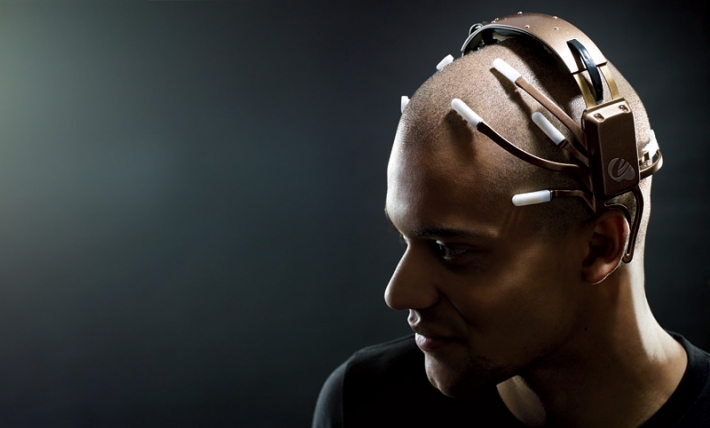
Brain control is the future of the mouse. The current generation of mind-reading headsets isn’t quite capable of mouse control. However, at the rate that technology is advancing, can it be far off? Who will write the next chapter in the history of the mouse?
Sources:
CHM
SRI
wikipedia.org
See also:
More articles about Technology
1 thought on “History of the Mouse”